Bible Study Methods

What is the Bible?
New Testament

Arrangement

The structural organization of the New Testament is primarily delineated by literary genre, rather than chronological order, grouping texts by their narrative, historical, or epistolary styles. A prime example of this categorization is found in the books of Luke and Acts; despite their separation by the Gospel of John in the traditional canonical sequence, they function as a unified, two-volume historical work written by the same author.
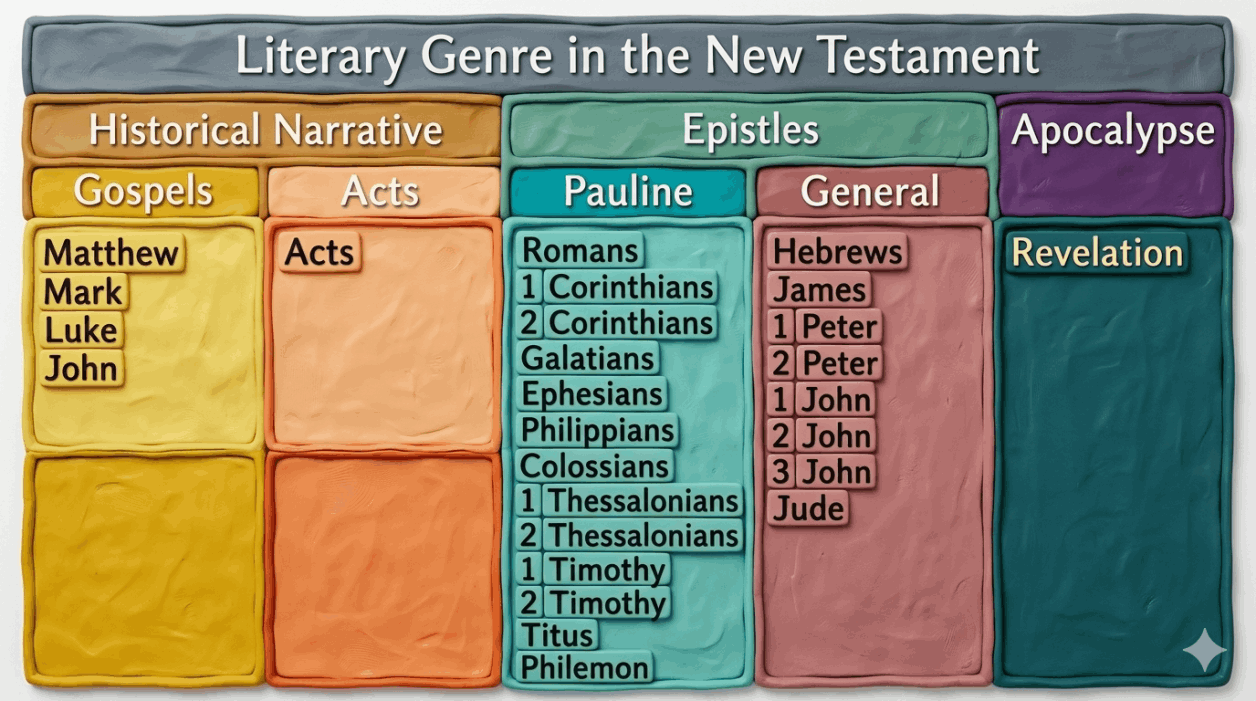
NT Genre

Arrangement

In the New Testament section, Codex Vaticanus arranges the material by positioning the Gospels first, followed by the Acts of the Apostles, the Catholic Epistles, and then the Pauline Epistles. Conversely, Codex Sinaiticus alters this sequence by inserting the Pauline Epistles immediately after the Gospels, preceding the Acts of the Apostles. 

The Latin Vulgate and late Byzantine minuscule manuscripts repositioned the Epistle to the Hebrews, shifting it to the final spot within the Pauline corpus.

The Book of Hebrews exhibits the most sophisticated, elegant, and stylistically polished Greek in the entire New Testament, characterized by a masterful command of classical rhetoric, an advanced vocabulary, and complex periodic sentence structures.

Because the anonymous epistle conspicuously lacked Paul’s characteristic opening salutation and formal signature, medieval scribes increasingly chose to position the book after Philemon, which stood as the shortest and final undisputed letter of the Pauline collection.

Modern Bibles use an arrangement similar to Sinaiticus, with Hebrews on the edge of the letters of Paul, and similar to Vaticanus, with the book of Acts following the Gospels.
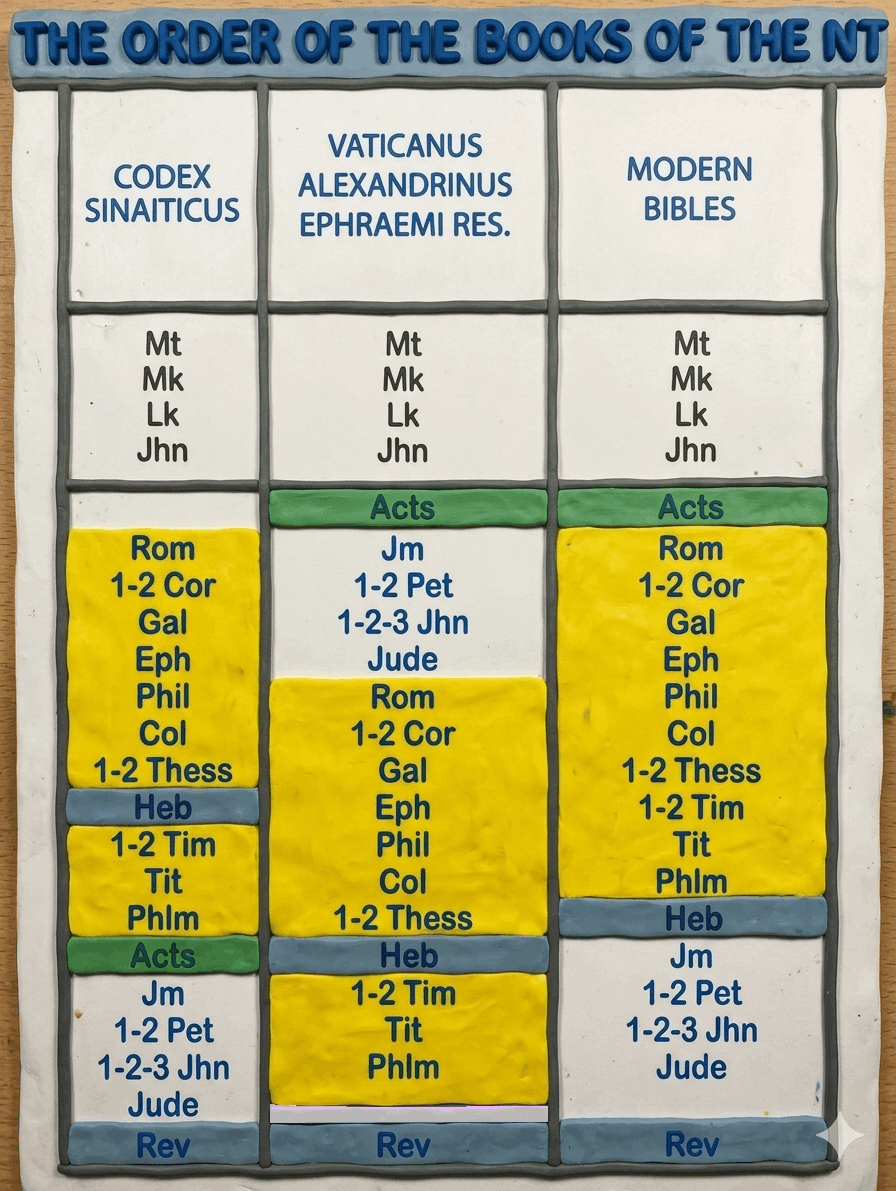
arrangement

Timeline & Authorship

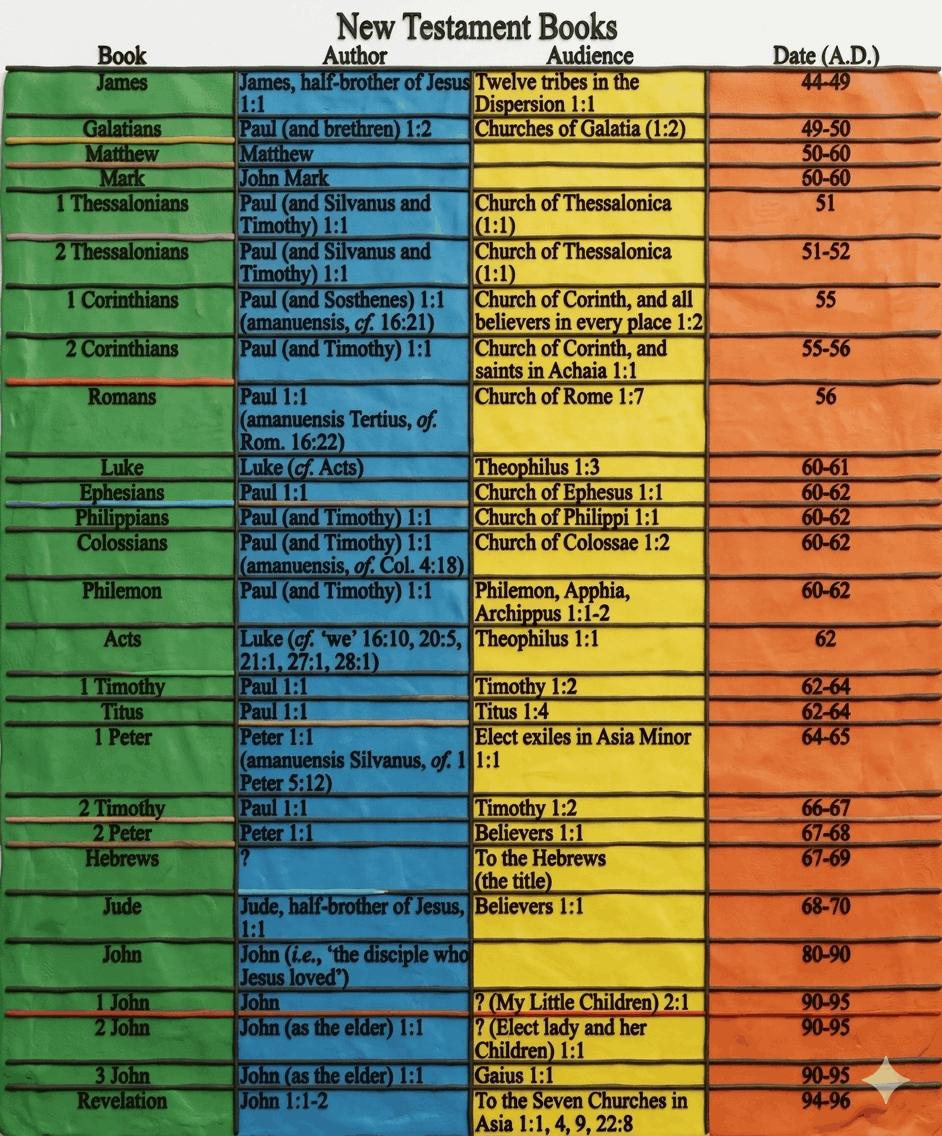
During the New Testament era, authors routinely employed scribes to transcribe their correspondence. This practice of dictating text to a professional writer, known technically as an amanuensis, was a standard literary convention widely reflected throughout the Biblical text.

nt timeline

Greek Uncial & Miniscule Alphabets

Uncial and minuscule are two distinct styles of handwritten lettering used in historical manuscripts, differing primarily in time period, letter shape, and writing speed.
Greek Uncial Alphabet

Α alpha
Β beta
Γ gamma
Δ delta
Ε epsilon
Ζ zeta
Η eta
Θ theta
Ι iota
Κ kappa
Λ lambda
Μ mu
Ν nu
Ξ xi
Ο omicron
Π pi
Ρ rho
Σ sigma
Τ tau
Υ upsilon
Φ phi
Χ chi
Ψ psi
Ω omega

Greek Minuscule Alphabet

α alpha
β beta
γ gamma
δ delta
ε epsilon
ζ zeta
η eta
θ theta
ι iota
κ kappa
λ lambda
μ mu
ν nu
ξ xi
ο omicron
π pi
ρ rho
σ,ς sigma
τ tau
υ upsilon
φ phi
χ chi
ψ psi
ω omega

Various features of Greek Manuscripts

Word separation, known as scriptio discontinua, typically defines later manuscripts dating from approximately A.D. 1000. Additionally, early papyri frequently utilized various paragraph headings, termed kephalaia, to organize content. While breathing and accent marks generally became standard features with the rise of minuscule script, certain late uncial manuscripts also integrated these textual elements alongside word separation.

"It will be noticed on even the most casual inspection that most Greek manuscripts are written without separation between words and sentences. This kind of writing, called scriptio continua, is easiest to read when one is reading aloud, syllable by syllable. Occasionally the grouping of syllables into words is ambiguous. For example in Roman 7:14 ὄιδαμεν may be divided into ὄιδα μεν, and in 1 Tim. 3:16 the words ὁμολογουμένως μέγα ἐστὶν may be taken as ὁμολογουμέν ὡς μέγα ἐστὶν. In Lev. 5:1 uncial manuscripts read HΨΥΧHHAΝΟΜΟΣHΔΙΑCΤEΛΛΟΥCΑ , which in some editions of the Septuagint (Tichendorf; Swete) is read ἢ ψυχὴ ἡ ἄνομος ἡ διαστέλλουσα, whereas the same letters (in accord with the Hebrew) can be read ἢ ψυχὴ ἡ ἄν ὁμοςῃ διαστέλλουσα (Rahlfs).

It must not be thought, however, that such ambiguities occur frequently. In Greek it is the rule, with very few exceptions, that native Greek words can terminate only in a vowel (or dipthong) or in one of three consonants." 

Bruce M. Metzger, Manuscripts of the Greek Bible: An Introduction to Palaeography (Oxford University Press, 1981), 31.

scriptorium

Text Type Families & Manuscripts

Manuscript Materials

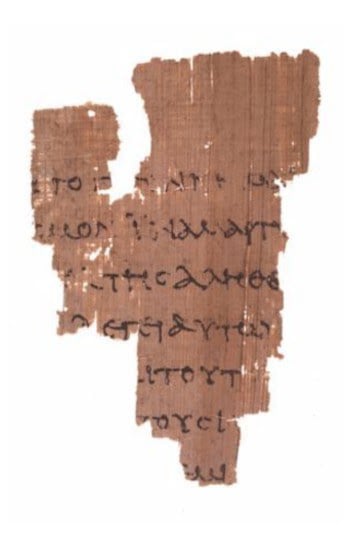
Historical manuscript production relied on three primary writing surfaces that evolved significantly over centuries, beginning with papyrus, an early material crafted from the pith of the aquatic papyrus sedge plant. As textual preservation demands shifted, scribes increasingly favored parchment, a highly durable medium manufactured from the treated skins of animals like sheep and goats, alongside its ultra-fine, premium variant known as vellum, which was derived specifically from calfskin. It was not until much later, around the eleventh century, that paper emerged as a widespread alternative, ultimately revolutionizing the accessibility and replication of written records.

Manuscript Construction

The physical evolution of the manuscript progressed from individual leaves and sheets into two dominant structural formats: the traditional scroll, constructed by sewing sheets side-by-side and rolling them into a continuous cylinder, and the codex, an innovative format of stacked, bound sheets that became the preferred binding method for early Christian church texts. 

Categories of Manuscripts

To organize these historical documents, scholars classify them into distinct categories based on material and script styles. Papyrus manuscripts are uniformly designated by the symbol 𝕻, while later parchment or vellum texts are divided into uncials, which are written in elegant capital letters and identified by a capital letter or numerical siglia, and minuscules, which utilize a smaller cursive script and are categorized strictly by number

Papyrus Manuscripts

PApyrus Mans...

papyrus

Written Old Testament Manuscripts

300 B.C. - A.D. 50 (circa 150 B.C.)
Dead Sea Scrolls

Various Old Testament texts

150-100 B.C.
Nash Papyrus

Exodus 20:2–17, Deuteronomy 5:6–21

A.D. 820-850
British Museum Oriental 4445

Pentateuch

A.D. 895
Codex Cairensis

Former & latter prophets

A.D. 900
Aleppo Codex

Old Testament

A.D. 916
Leningrad MS (Heb B 3)

Latter Prophets

A.D. 1010
Leningrad Codex B-19A

Old Testament

A.D. 1204
Torah Finchasiye (Samaritan triglot from Nablus)

Pentateuch

~A.D. 1250
Damascus Pentateuch

Entire Old Testament (some loss)

Printed Editions

A.D. 1477
Bologna Edition of Psalter

Psalms

A.D. 1488
Soncino Edition of Old Testament

Entire Old Testament

A.D. 1525/26
Second Bomberg Edition

Entire Old Testament

Translations

unknown (400 B.C -100 B.C.)
Samaritan Pentateuch (Samaritan)

Pentateuch

250-150 B.C.
Septuagint (Greek)

Torah (initially)

A.D. 100-200
Peshitta Syriac Old Testament (Syriac)

Entire Old Testament


A.D. 130
Aquila's Version (Greek)

Fragments

A.D. 170
Symmachus' Version (Greek)

Entire Old Testament

A.D. 180-190
Aquila's Theodotion's Version (Greek)

Entire Old Testament

A.D. 200
Targum of Onkelos (Aramaic)

Torah

A.D. 200
Old Latin, Italia version (Latin)

Fragments

A.D. 300
Targum of Jonathan ben Uzziel (Aramaic)

Joshua to Kings, Isaiah to Malachi

A.D. 390-404
Jerome's Vulgate (Latin)

Entire Old Testament

A.D. 450
Wurzburg Palimpsest Codex (Latin)

Torah, Prophets

A.D. 616
Syriac Hexapla (Syriac)

Entire Old Testament

A.D. 650
Targum of Pseudo-Jonathan (Aramaic)

Torah

A.D. 650
Lyons Codex (Latin)

Genesis to Judges

A.D. 700 
Jerusalem Targum (Aramaic)

Torah

ketef hinnom

Ketef Hinnom Scroll

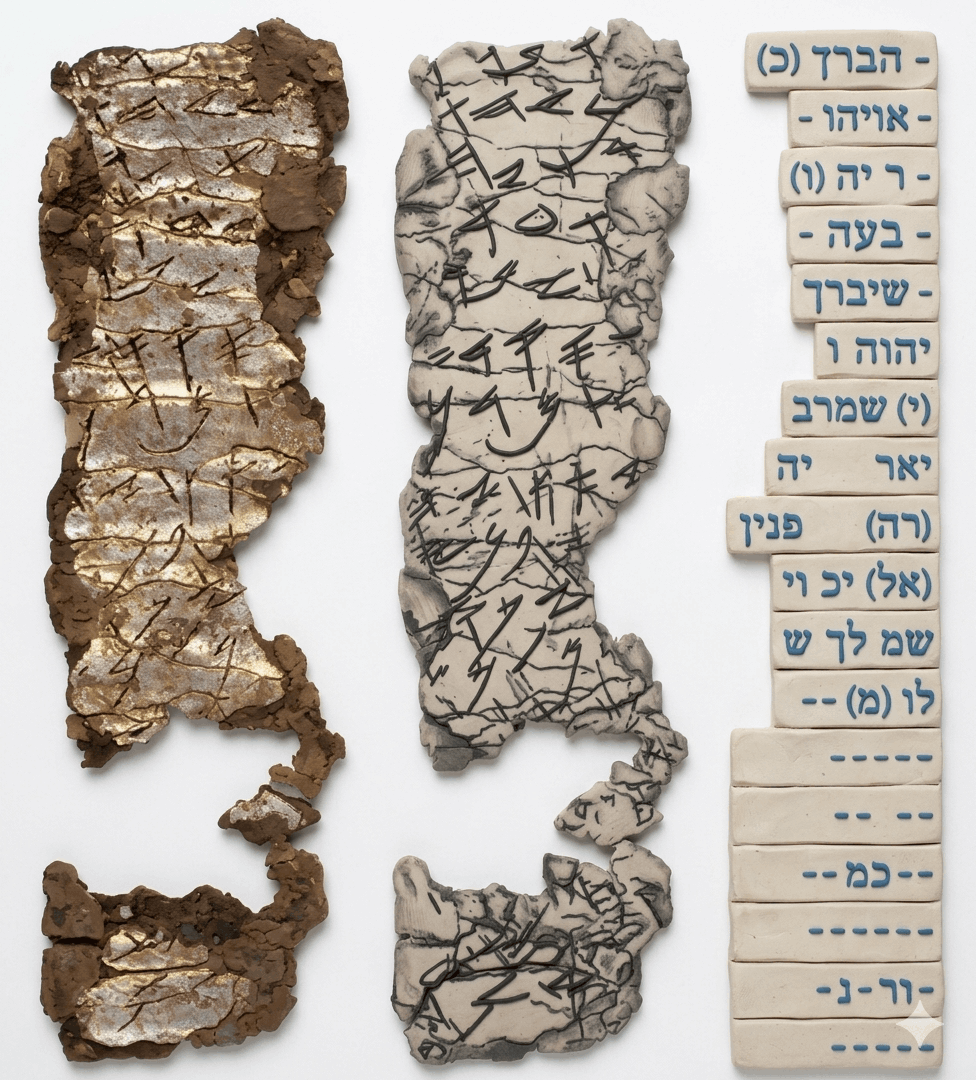
Discovered within the environs of Jerusalem, the Ketef Hinnom artifact consists of a diminutive silver scroll dating back to the First Temple period—an era that concluded precipitously with the Babylonian destruction of the initial Israelite temple in 586 B.C.

Remarkably, this meticulously crafted scroll preserves the sacred priestly benediction articulated in Numbers 6:24-26. The text is inscribed in the ancient paleo-Hebrew script, a localized alphabetic system utilized prior to the Babylonian exile, after which the Jewish community extensively adopted Aramaic characters. Epigraphic and archaeological analyses place the creation of this artifact at approximately 700 B.C., rendering it one of the oldest surviving fragments of a biblical text.

Ketef Hinnom

 The Ketef Hinnom scrolls

Discovered in 1979 within a ancient burial chamber, the Ketef Hinnom scrolls consist of two tiny silver artifacts that are now recognized as the oldest surviving texts from the Hebrew Bible, dating back to approximately 700 B.C. Inscribed with portions of the well-known Priestly Blessing from the Book of Numbers, these delicate objects were apparently once utilized by their owners as protective amulets. Because of their incredibly fragile state, scholars had to spend three painstaking years developing a specialized preservation method to safely unroll the silver sheets without causing them to disintegrate.

(4.3 minutes)

isaiah scroll

Dead Sea Scrolls - Isaiah Scroll

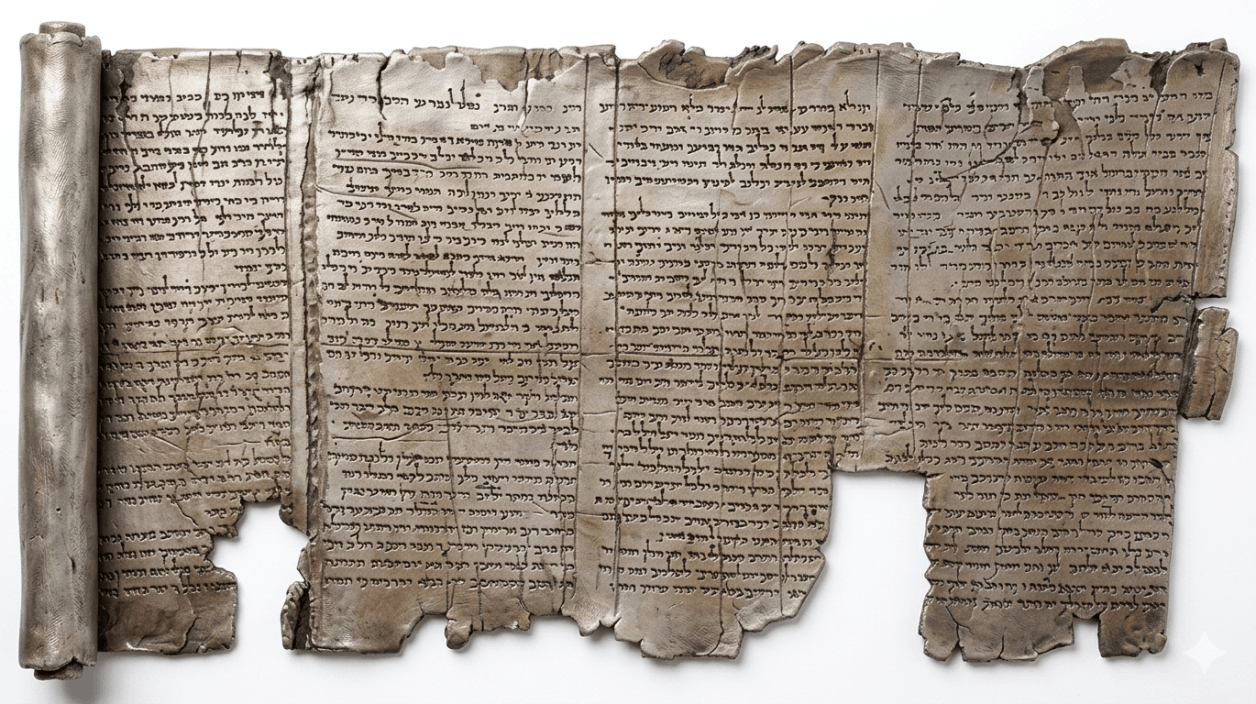
The discovery of the Dead Sea Scrolls stands as a monumental milestone for modern biblical scholarship, profoundly deepening our understanding of the transmission and preservation of the Hebrew Scriptures. Unearthed in the mid-20th century near the Dead Sea, these ancient manuscripts provided historians and theologians with an unprecedented window into textual history. Prior to this discovery, the earliest available copies of the Hebrew Bible were centuries younger, leaving open questions about how accurately the text had been preserved through generations of manual copying.

A premier example of this extraordinary preservation is the Great Isaiah Scroll, which is paleographically dated to approximately 150 B.C. When scholars meticulously compared this ancient text to the Masoretic version handed down through the centuries, they discovered a stunning degree of textual fidelity. The two versions match almost perfectly; the only deviations consist of minor variations, which are typically confined to archaic spelling differences or grammatical nuances. This remarkable consistency underscores the meticulous precision of ancient scribes and confirms that the book of Isaiah remained virtually unaltered over more than a millennium

Great Isaiah Scroll

Book Minute: The Great Isaiah Scroll

The Great Isaiah Scroll is the most famous of the seven "original" Dead Sea Scrolls discovered in the Qumran caves in 1947, a discovery widely hailed as one of the greatest archaeological finds of the modern era. As a monumental 2,000-year-old manuscript, it contains over 25 percent of all the biblical text found among the scrolls, with nearly every part of its 66 chapters remaining completely intact. Due to its exceptionally fragile condition, the scroll must be securely preserved under lock and key inside a temperature-controlled underground vault in Jerusalem. Because of these strict preservation needs, it remained hidden away for over 40 years until it was finally put on public display in 2008 for a brief period of just a few months, and then again in 2026.

(1 minute)

"With the discovery of the Dead Sea Scrolls, scholars have Hebrew manuscripts one thousand years earlier than the great Masoretic Text manuscripts, enabling them to check on the fidelity of the Hebrew text. The result of comparative studies reveals that this is a word-for-word identity in more than 95 percent of the cases, and the 5 percent variation consists mostly of slips of the pen and spelling. To be specific, the Isaiah scroll (1Q Isa) from Qumran led the Revised Standard Version translators to make only thirteen changes from the Masoretic text; eight of those were known from ancient versions, and few of them were significant. More specifically, of the 166 Hebrew words in Isaiah 53 only seventeen Hebrew letters in 1Q Isb differ from the Masoretic Text. Ten letters are a matter of spelling, four are stylistic changes, and the other three compose the word for "light" (add in v.11), which does not affect the meaning greatly. Furthermore that word is also found in that verse in the LXX and 1Q Isa."

Geisler and Nix, A General Introduction to the Bible, Moody, 1986, pg. 382.

Masoretic Text

Originating from the Hebrew word masoreth, meaning “tradition,” the Masoretic text represents the meticulously assembled and codified traditional text of the Jewish Bible. This monumental scholarly endeavor began around the 6th century A.D. and reached completion in the 10th century, spearheaded by dedicated groups of Jewish scholars known as Masoretes. Working diligently within Talmudic academies across Babylonia and Palestine, these individuals labored under a singular, profound mission: to reproduce and preserve, as accurately and faithfully as possible, the pristine and original text of the Hebrew scriptures for successive generations.

To achieve this goal without altering the sacred consonantal text handed down to them, the Masoretes pioneered a sophisticated system of diacritical markings. They invented vowel pointings and cantillation marks that were intricately placed around the existing alphabetical characters, serving as a phonetic guide to guarantee correct pronunciation and liturgical chanting. By introducing these external markers rather than modifying the core text itself, the Masoretes successfully standardized the reading of the scriptures, thereby eliminating ambiguity while strictly maintaining the physical integrity of the ancient writings.

The extraordinary precision of the Masoretes extended well beyond phonetic standardization into an exhaustive system of textual quality control. Upon completing the final codification of each biblical section, they painstakingly counted and recorded the exact number of verses, words, and individual letters, even going so far as to identify the precise verse, word, and letter that marked the absolute center of the text. This rigorous statistical auditing ensured that any future scribal emendation, omission, or addition could be immediately detected, a level of care that is directly credited for the remarkable consistency found in Hebrew Old Testament manuscripts down through the centuries.

leningrad

Leningrad Codex

The Leningrad Codex stands as a monumental artifact in textual scholarship, recognized as the oldest extant complete manuscript of the Hebrew Scriptures, or Tanakh. Written in A.D. 1008, this invaluable codex serves as a primary, fully preserved witness to the Masoretic tradition, providing modern researchers with an essential baseline for analyzing the historical transmission and linguistic preservation of biblical texts.

publican

Transmission & Textual Criticism

In stark contrast to the modern era of instantaneous digital communication and mass-produced office supplies, historical literary production was an entirely artisanal, labor-intensive endeavor. Ancient and medieval societies completely lacked convenience tools such as standardized notebooks, pencils, erasers, typewriters, and copy machines; instead, every stage of the writing process was performed intricately by hand. This specialized landscape was dominated by highly trained scribes who operated within dedicated monastic workshops known as scriptoriums, effectively controlling the replication and consumption of written knowledge. Rather than utilizing wood-pulp paper, these artisans primarily recorded texts on durable vellum—animal skins painstakingly prepared for writing—or occasionally on plant-based papyrus, using a rudimentary yet permanent ink formulated from lamp soot and bound with natural gums.


The making of Torah Scroll

A Torah scroll is meticulously handcrafted by a certified scribe called a sofer, following strict religious laws that have remained unchanged for a millennia. The scribe writes out all 304,805 Hebrew letters entirely by hand using a quill made from a bird feather, such as a turkey or goose, and a specially prepared permanent black ink. The text must be copied directly from an authentic source manuscript onto klaf—sheets of parchment prepared exclusively from the skin of a select animal, which are pre-etched with faint lines to ensure perfectly straight writing. If the scribe makes even a single error in writing the holy name of God, that entire section of parchment cannot be used. Once all the individual sheets of parchment are completed and verified for absolute accuracy, they are sewn together using thread made from animal sinews and attached to two ornate wooden rollers known as atzei chayim (trees of life).

(12.3 Minutes)


Textual Criticism

Textual criticism operates as both an art and a science, employing rigorous analytical methodologies to reconstruct and restore the original readings of historical literary works. This discipline is rendered essential by the inherent fallibility of human transmission over centuries. Unlike higher criticism, which analyzes the historical context, authorship, and literary content of a document, lower criticism—synonymous with textual criticism—focuses strictly on the physical text itself to isolate and correct transcription discrepancies.

Before the advent of modern printing presses, digital typography, or mass-produced media, the preservation of literature depended entirely on manual reproduction. Scribes frequently copied manuscripts by sight or by listening to a lector dictate the text aloud to a scriptorium. This highly manual, human process left texts acutely vulnerable to typographical risks, as visual fatigue and auditory misinterpretations introduced errors that were subsequently propagated through future generations of copies.

The preferred reading is one that…
Textual Critics evaluate the manuscript evidence to determine what is the original reading of scripture.

“Canons of Textual Criticism” from Gleason Archer’s Survey of Old Testament Introduction, pg. 64.
  1. Is older
  2. Is more difficult
  3. Is shorter
  4. Best explains variants
  5. Has the widest geographical support
  6. Conforms to the style and diction of the author
  7. Reflects no doctrinal bias
Errors in Manuscript Copying
Adapted from:
“Most common manuscript errors” from Gleason Archer’s Survey of Old Testament Introduction, pg. 60.

  • Haplography: The accidental omission of a letter or word that should have been repeated sequentially. (Judges 20:13, where "sons" is missing).
  • Dittography: The erroneous duplication of a letter, word, or phrase that should only appear once. (Ezekiel 16:6 in the Hebrew text).
  • Metathesis: The accidental transposition or swapping of adjacent letters or words within a text. (Psalm 49:11).
  • Fusion: The mistaken combination of two separate words, or parts of words, into a single word.
  • Fission: The erroneous division of a single word into two distinct words. (Hosea 6:5).
  • Homophony: The substitution of a word with a homonym that sounds identical but has a different meaning. (Psalm 100:3; compare NASB to NIV).
  • Misreading Similar Letters: The confusion and substitution of one character for another due to their similar graphic shapes. (Jeremiah 15:14).
  • Homoeoteleuton: The omission of an intervening text passage caused by the scribe's eye skipping between two identical word endings. (Judges 16:13–14).
  • Homoeoarkton: The omission of an intervening text passage caused by the scribe's eye skipping between two identical word beginnings.
  • Accidental Omission: The casual or inadvertent loss of a single word or letter during transcription.
  • Vowel Misreading: The misinterpretation of weak vowel letters, causing the scribe to transcribe them as consonants.
  • Vowel Point Variations: The misreading of weak vowels as consonants, or discrepancies in vowel points that alter a word's meaning.
  • Marginalia: The accidental integration of explanatory notes or corrections from the manuscript margin into the main body text. (Isaiah 38:21–22, cf. 2 Lings 20:7-8, Joshua 2:15 & LXX)

Conclusion

"The thousand of Hebrew Manuscripts, with their confirmation by the LXX and the Samaritan Pentateuch, and the numerous other crosschecks from outside and inside the text provide overwhelming support for the reliability of the Old Testament. Hence, it is appropriate to conclude with Sir Frederic Kenyon's statement, 'The Christian can take the whole Bible in his hand and say without fear or hesitation that he holds in it the true word of God, handed down without essential loss from generation to generation throughout the centuries.'"

Geisler and Nix, A General Introduction to the Bible, Moody, 1986, pg. 382.

sand

No Code Website Builder